
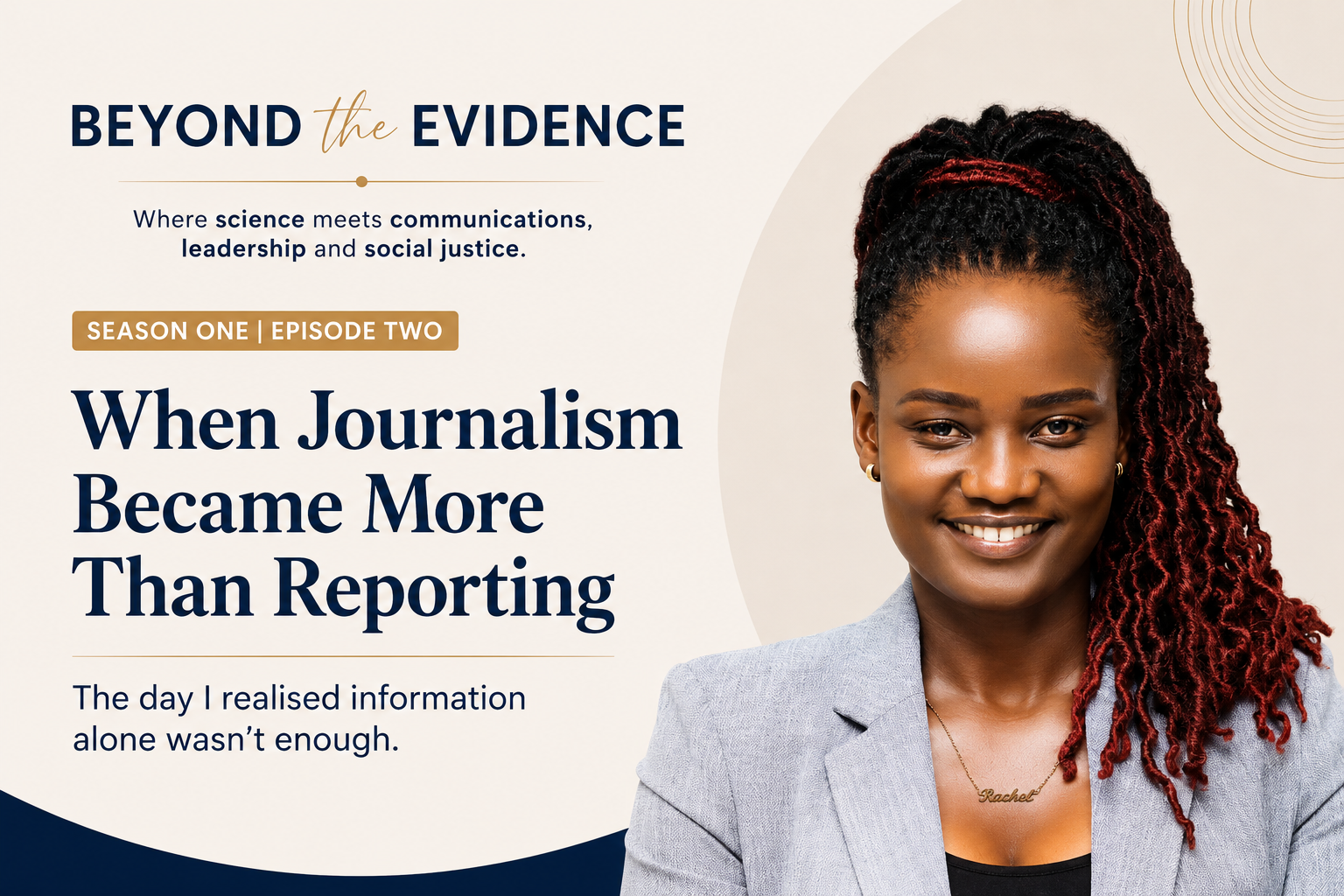
By Rachel Kalera - Mhango · 2026-08-11
When Journalism Became More Than Reporting
I often say I started my career as a journalist.
Looking back, I realise that isn't entirely true.
I started as a young, energetic presenter at Malawi Broadcasting Corporation's Radio 2 FM. I loved every moment of it. I loved the excitement of being on air, the privilege of hosting the peak-hour programmes, and the thought that thousands of people were listening as they drove to work or made their way home.
At that stage, much of what I shared revolved around entertainment, everyday life and simple conversations. It was engaging, enjoyable and connected me with listeners, but very little of it was the kind of information that would make someone pause and rethink an important decision.
To me then, that wasn't journalism.
As my career progressed, I moved into the newsroom, covering events and writing stories for the news bulletins. Every day came with a new assignment. One day it was politics. Another day it was health. The next it was agriculture or business. The assignment depended on where the News Editor sent you. Your responsibility was simple: go, gather the facts, write the story and meet the deadline.
As long as you brought back a story, you had done your job.
Or so I thought.
Everything changed when I began working under one of Malawi's finest journalists and media leaders, the late Jika Nkolokosa.
He challenged us to think differently about journalism. His argument was simple but profound.
"You spend an entire day travelling, conducting interviews and gathering valuable information, only to reduce it to a one-minute news story. What happens to everything else? Why not use that information to produce special reports that can make a real difference in society?"
That argument was my turning point.
Many of my colleagues naturally gravitated towards politics, governance, business and development. Those were important stories, and they deserved attention. But my mind kept returning to something deeply personal.
A close family member had almost lost her life after a series of incorrect diagnoses. It was only when she finally met a specialist that she received the right diagnosis and appropriate treatment. Watching that experience unfold taught me something I had never fully appreciated before.
Sometimes the greatest danger is not the disease itself. It is the lack of accurate information. That experience shaped a decision that would quietly redefine my career. I decided that my special reports would focus on health.
Not because health was more important than other beats, but because I believed that accessible health information could help people make better decisions about their own lives.
My first special report focused on family planning. At the time, Malawi was introducing different family planning methods, including oral contraceptives, Depo-Provera injections, the loop and other options. Rather than simply announcing their availability, I wanted listeners to understand them.
What is family planning?
Why does it matter?
How do the different methods work?
What are the possible side effects?
How does someone choose the method that is right for them?
The objective was not simply to provide information. It was to make that information meaningful. When the report aired, the first person to speak to me about it was Jika Nkolokosa. To this day, I still remember his words.
"Rachel, this is a brilliant report. If you continue on this path, I would not be surprised to see you working for one of those big organisations on health issues—even the WHO."
At the time, I smiled and thanked him. I don't think I truly appreciated what he saw. Years later, I found myself working at one of Malawi's leading clinical research institutions, helping scientists communicate research, strengthening public engagement and translating scientific evidence into information that communities, policymakers and the media could understand.
Looking back now, I realise that journey did not begin in a research institution. It began with one special report. Then another. Then another.
Each one reinforced a simple truth: journalism is not only about telling people what happened.
At its very best, journalism helps people understand what matters, why it matters and how that knowledge can shape better decisions.
That was the moment journalism became more than reporting. It became public service.
And without realising it, I had taken my first step towards science communication.