
By Rachel Kalera-Mhango · 2026-08-04
Passion Led Me Here
I recently came across an article on 'Leadership First' on LinkedIn with a simple but powerful headline: "You can replace any employee's position. But you can never replace their passion."
That sentence stayed with me.
It immediately reminded me of two of the most important lessons from The Diary of a CEO. The first is the Law of Self, which encourages us to intentionally fill our buckets by investing in our knowledge (what we know), skills (what we can do), network (who we know), resources (what we have), and reputation (what people think of us). The second is the principle that if we truly want to master something, we should take on the obligation to teach it.
Looking back, I realise that both principles have quietly shaped my career.
When I was practising journalism, I made a deliberate decision to use the platform not simply to report the news, but to deliver important, life-changing information in ways that ordinary people could understand. I came to one simple conclusion: many lives could be saved if people had access to accurate health information early enough to seek diagnosis, treatment, and support.
That became my purpose.
I invited doctors and scientists, often some of the busiest and most difficult people to access, to join me on radio and television programmes. They would explain conditions that seemed straightforward to them, such as a fistula, but were often misunderstood by the communities most affected. Sometimes our conversations were not about complicated diseases at all. A simple discussion on the importance of routine medical check-ups could fill an entire thirty-minute programme.
My greatest reward was never the salary.
It was the messages from listeners.
"Thank you for that programme. I had the same symptoms the doctor described. I went to the hospital and received treatment."
Those messages changed me.
One life saved.
One disease detected early.
One informed decision.
One step towards positive social and behaviour change.
Without realising it, I had discovered a passion that would shape the rest of my career. That passion made my transition from mainstream media into science communication feel like a natural progression rather than a career change. It was there that I developed a much deeper appreciation of scientists, research and the responsibility that comes with communicating evidence. One lesson stood out above all others. Research participants should never be treated simply as numbers that contribute to a study. They are people with questions, hopes and concerns who deserve to understand the research they are invited to participate in.
Equally, I came to appreciate that the impact of research should not end the day a paper is published. Publication is not the finish line. It is often the beginning of the journey. Research only achieves its full value when its findings are understood, translated into accessible information, and used to influence policy, improve practice and empower communities to make informed decisions. That conviction shaped much of my work.
We strengthened collaboration between scientists and the media because each brought something equally valuable to the table. Scientists generated evidence. Journalists translated that evidence into stories that people could understand and use in their daily lives.
Making that relationship work required more than media releases. It required dedicated science communication and public engagement systems, thoughtful dialogue, and people willing to sit between both worlds and help each understand the other.
I found my place there.
Years later, I still cannot think of a career that gives me greater fulfilment than standing at the centre of knowledge translation. In moments of listening, unpacking technical language, identifying the messages that matter, and helping ensure that evidence reaches the people who need it most, someone quietly recognised that passion and invited me to teach a Master's module in Science Communication.
It immediately took me back to The Diary of a CEO: "If you want to master something, teach it." As I share my knowledge with the next generation of communication professionals, I realise that every conversation, every radio programme, every research dissemination meeting, every policy dialogue, and every engagement with communities has been preparing me for this moment.
Perhaps passion really cannot be replaced.
It simply evolves, grows deeper, and eventually finds new ways to serve.
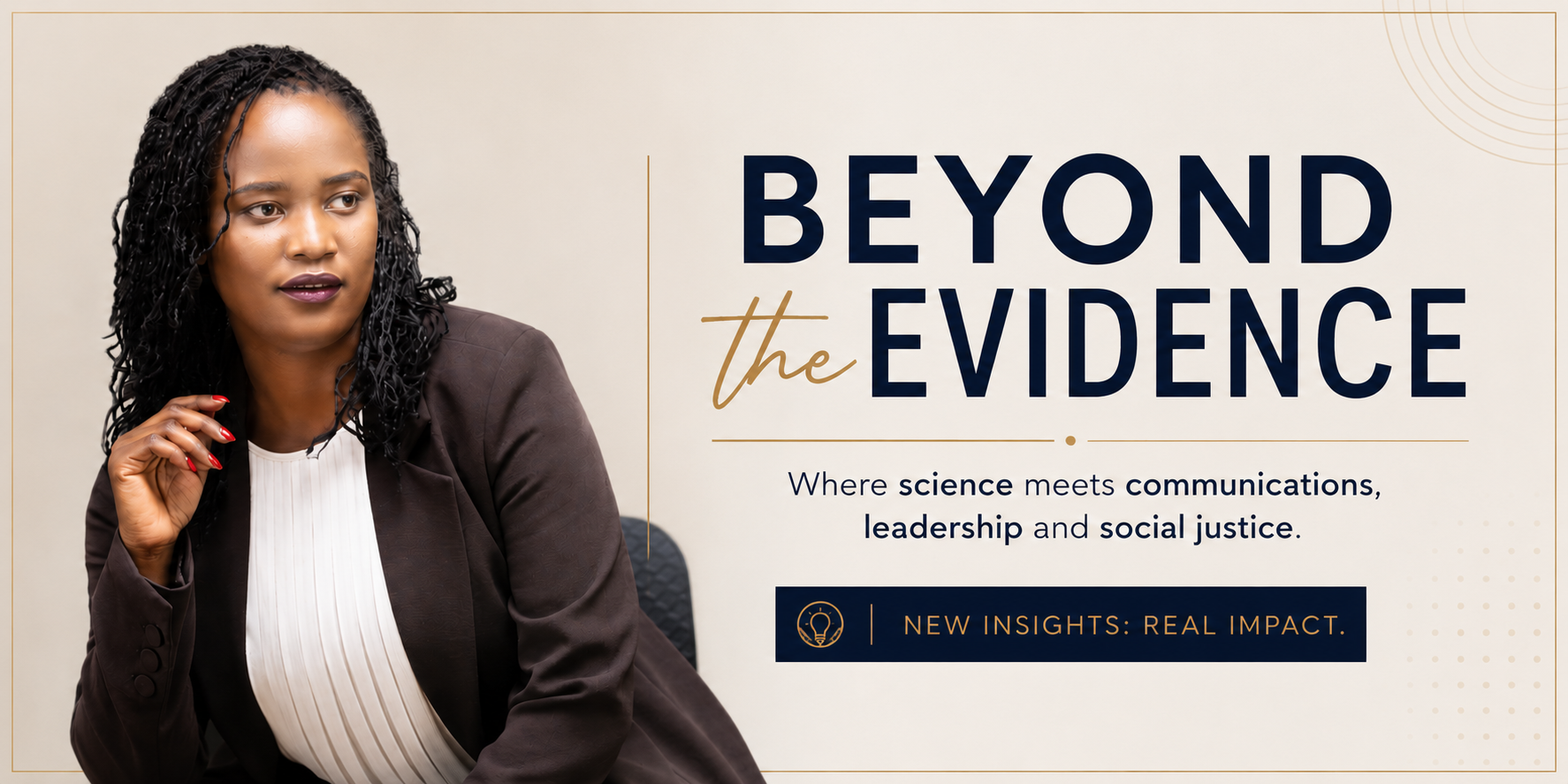
This blog is one of those new ways.
Welcome to the journey.